Tuesday, December 16, 2025 • Industry and Trends
Water meters are designed to measure liquid flow. But what if they can't tell the difference between water and air? Service interruptions happen regularly, maintenance work, infrastructure repairs, water rationing. Each time supply stops, pipes get drained and air fills the void. When service resumes, that air rushes through mechanical meters built to measure volume displacement, not composition. The meter counts it just like water. It spins, records usage, and adds to your bill.
The result? Bills reflect phantom consumption of water that was never delivered. Customers end up paying for air that passed through empty pipes during service interruptions. This isn't a rare glitch. It's a widespread problem affecting water customers around the world, and it stems from a fundamental limitation in how traditional mechanical meters work.
The Global Pattern
Cases reported across multiple countries reveal the same disturbing pattern. In South Africa alone, WaterCAN documented over 100 cases of extreme water bills due to air billing in 2024. One resident's bill jumped from R3,000 to R295,000 in just two months, recording 2.1 million liters during periods when water supply was completely shut off. In another documented case, a Somerset West resident saw monthly water bills escalate from R400-R500 to R965 in December, R1,181 in January, and R1,547 in February, coinciding with multiple water supply interruptions in the area. Residents literally paid for air rushing through empty pipes during water outages. The problem extends far beyond isolated incidents, affecting communities across entire regions. Elsewhere globally, the story repeats: drastically inflated bills during service interruptions, meters recording massive volumes while pipes sit empty, and customers forced into lengthy disputes.
The Operational Cost for Water Utilities
These air intrusion incidents create cascading challenges across utility operations. Customer service teams spend countless hours fielding complaints and explaining bills that don't match actual consumption. Technicians dispatch to investigate reported issues, only to find nothing wrong with infrastructure. Billing departments work overtime processing adjustments, credits, and dispute resolutions.
For utilities using prepaid metering systems, the situation becomes even more critical. Customers who have paid in advance watch their credits drain as air passes through meters, consuming purchased units for water they never received. This creates immediate financial impact and intensifies customer frustration, as they've already invested money that disappears without delivering any actual service.
Each air-induced false reading damages customer confidence in metering accuracy. This extends beyond individual billing disputes, it erodes utility reputation and strains customer relationships across entire service territories. Traditional meters measure flow volume without distinguishing composition. The fundamental limitation of mechanical metering technology creates ongoing operational challenges that impact both utilities and the customers they serve.
Real-Time Monitoring: The Solution to Air-Induced Billing Issues
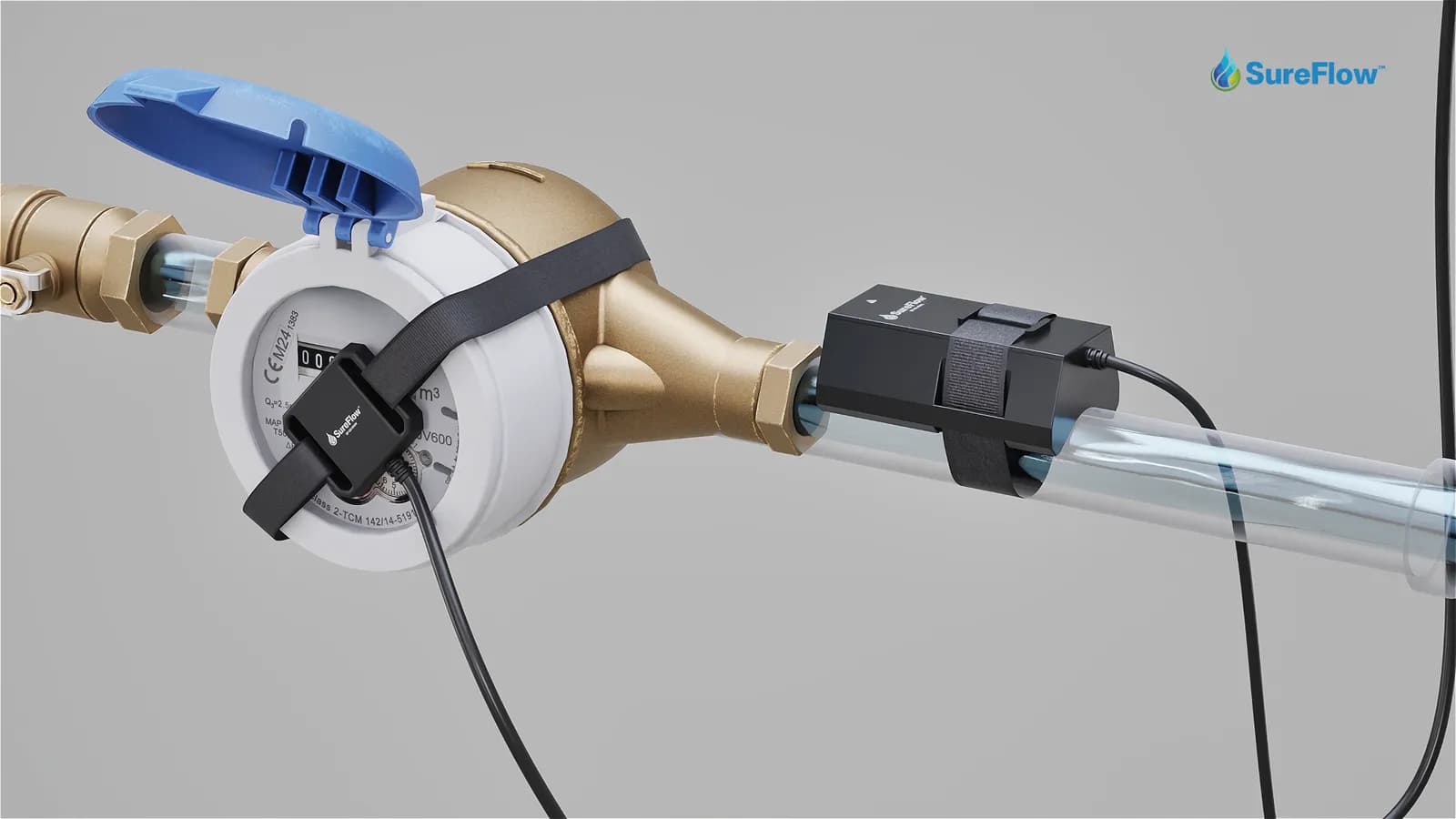
Solving this problem requires real-time monitoring solutions that distinguish between actual water flow and air passage. IoT-enabled sensors combined with AI-driven analytics detect anomalies as they occur, identifying flow patterns indicating air presence rather than water consumption. This technology shifts your utility from reactive dispute management to proactive accuracy control, protecting both your revenue integrity and customer trust.
Building Trust Through Accurate Monitoring
SureFlow delivers intelligent monitoring solution that ensure the meters reflect actual consumption, eliminating air-induced disputes while protecting both customer trust and revenue integrity.
Concerned about metering accuracy across the network? Contact SureFlow to discover how our technology can transform the water management operations and strengthen customer relationships