Tuesday, February 3, 2026 • Industry and Trends
Turning on a tap should deliver clean, safe drinking water. This relies on a simple principle: water flows in one direction from treatment plants through distribution pipes to homes and businesses. But what happens when that flow suddenly reverses?
Backflow happens when pressure dynamics in water systems change unexpectedly. Sudden pressure drops or external systems that create excessive pressure reverse the normal flow direction, allowing contaminated water to flow back through the plumbing system into clean water supplies. Communities worldwide have faced severe health crises when backflow allowed pesticides, industrial chemicals, sewage, and other hazardous substances to enter their drinking water.
Why Backflow Happens
Backflow occurs when pressure dynamics in water systems change unexpectedly, creating pathways for contaminated water to move into clean supply lines. At least three factors are known to cause backflow.
Backsiphonage occurs when pressure drops in the water mains. This might happen during firefighting operations that draw massive volumes of water quickly, during repairs that require shutting down sections of the system, or when pumps fail unexpectedly. The sudden pressure loss creates a vacuum, drawing water back from wherever it's connected.
Back-pressure happens when industrial facilities, commercial buildings, and even residential properties have equipment that connects to the public water supply, such as heating systems, cooling towers, chemical injection systems, and irrigation networks. If pressure in these systems exceeds that in the municipal supply line, contaminated water is pushed back into the distribution network.
Equipment failure at connection points represents the third critical factor. Defective backflow prevention devices, improperly installed meters, or faulty connections create unprotected pathways for contaminated water to enter the distribution system. When protective barriers fail or are never installed where required, back-siphonage or backpressure conditions can push contamination into clean supply lines.
Real Incidents That Changed Water Safety Practices
At a UK primary school, warm and discolored water flowed from playground drinking fountains, with temperatures exceeding 57°C, hot enough to cause serious injury. Inspectors discovered a permanent cross-connection between the drinking water supply and the heating system without proper backflow prevention devices, allowing contaminated heating water to backpressure into the school's drinking water supply. The facility was immediately shut down until the cross-connection was eliminated.
A fruit farm in Gloucestershire was fined after fertiliser contamination caused water in 30 homes to turn pink. The backflow incident occurred when agricultural chemicals entered the local water supply through an improperly protected connection. This incident underscores the dangers of inadequate backflow prevention in agricultural and industrial settings, where chemical use creates high contamination risks for public water systems.
The Challenge for Water Utilities
When backflow contamination occurs, the response is immediate and extensive. Utilities must issue public health warnings, sometimes ordering entire neighborhoods to stop using water for drinking, cooking, or bathing. Emergency crews work to isolate the affected areas, which requires shutting valves throughout the distribution network to prevent contamination from spreading further.
Customer service operations become overwhelmed with calls about water safety and service restoration timelines. Public meetings, media statements, and coordinated agency responses compound both the technical and administrative challenges, while financial costs escalate rapidly.
Regulatory Landscape: Backflow Prevention Requirements in Europe
Backflow prevention is critical for water safety, but Europe's regulatory landscape remains fragmented. While the EU Drinking Water Directive establishes the framework for water quality protection, individual member states implement their own backflow prevention requirements, creating significant variation across the continent.
The UK leads with comprehensive mandates. Under the Water Supply (Water Fittings) Regulations 1999, commercial and industrial premises must install backflow prevention devices based on fluid category risk levels, with mandatory annual testing to ensure ongoing protection.
Germany recently strengthened its standards. The Drinking Water Ordinance (TrinkwV), updated in June 2023, now requires protective devices specifically for commercial and industrial installations, reflecting growing awareness of contamination risks.
France has maintained rigorous requirements for decades. Since 1987, the Public Health Code has mandated backflow protection and qualified personnel to manage these systems, demonstrating a long-standing commitment to water safety.
Traditional compliance is no longer enough. Conventional regulations focus on installing prevention devices and scheduling periodic testing, an approach that's reactive rather than proactive. By the time contamination is detected during routine testing, public health may already be at risk.
Continuous monitoring represents the next evolution in water safety. Advanced systems detect flow anomalies in real time, shifting from passive prevention to active detection. This technology offers facilities a critical advantage: the ability to protect public health proactively, not just meet minimum compliance standards.
Continuous Monitoring: Detecting Backflow before contamination spreads
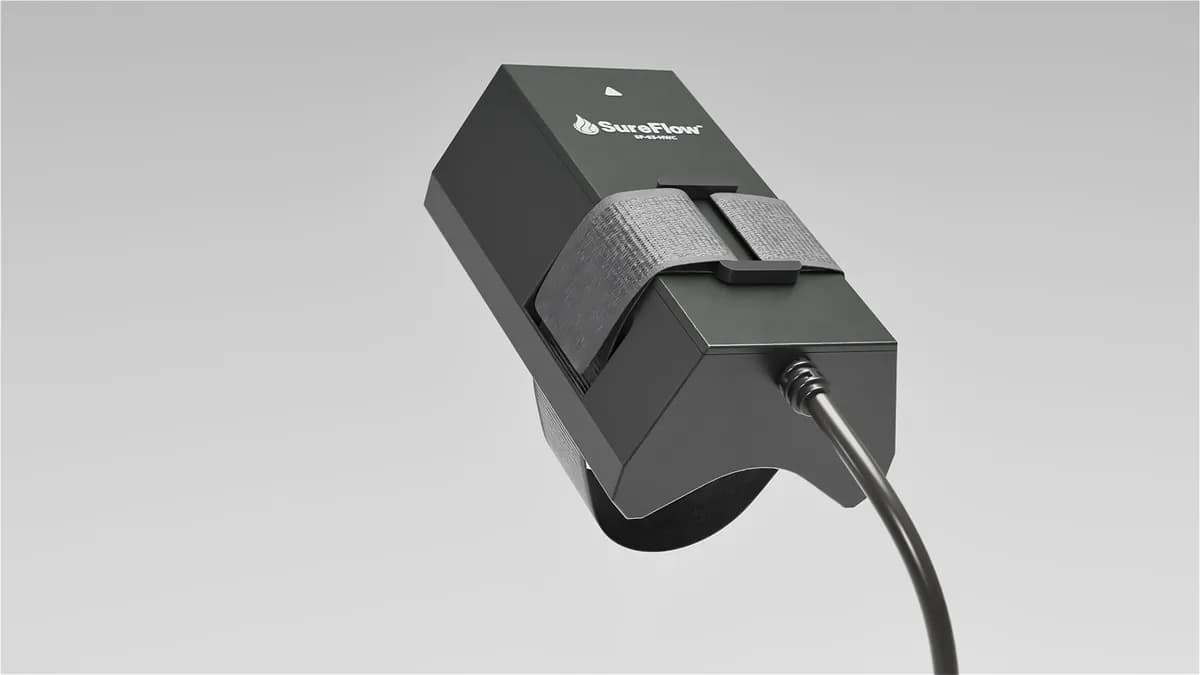
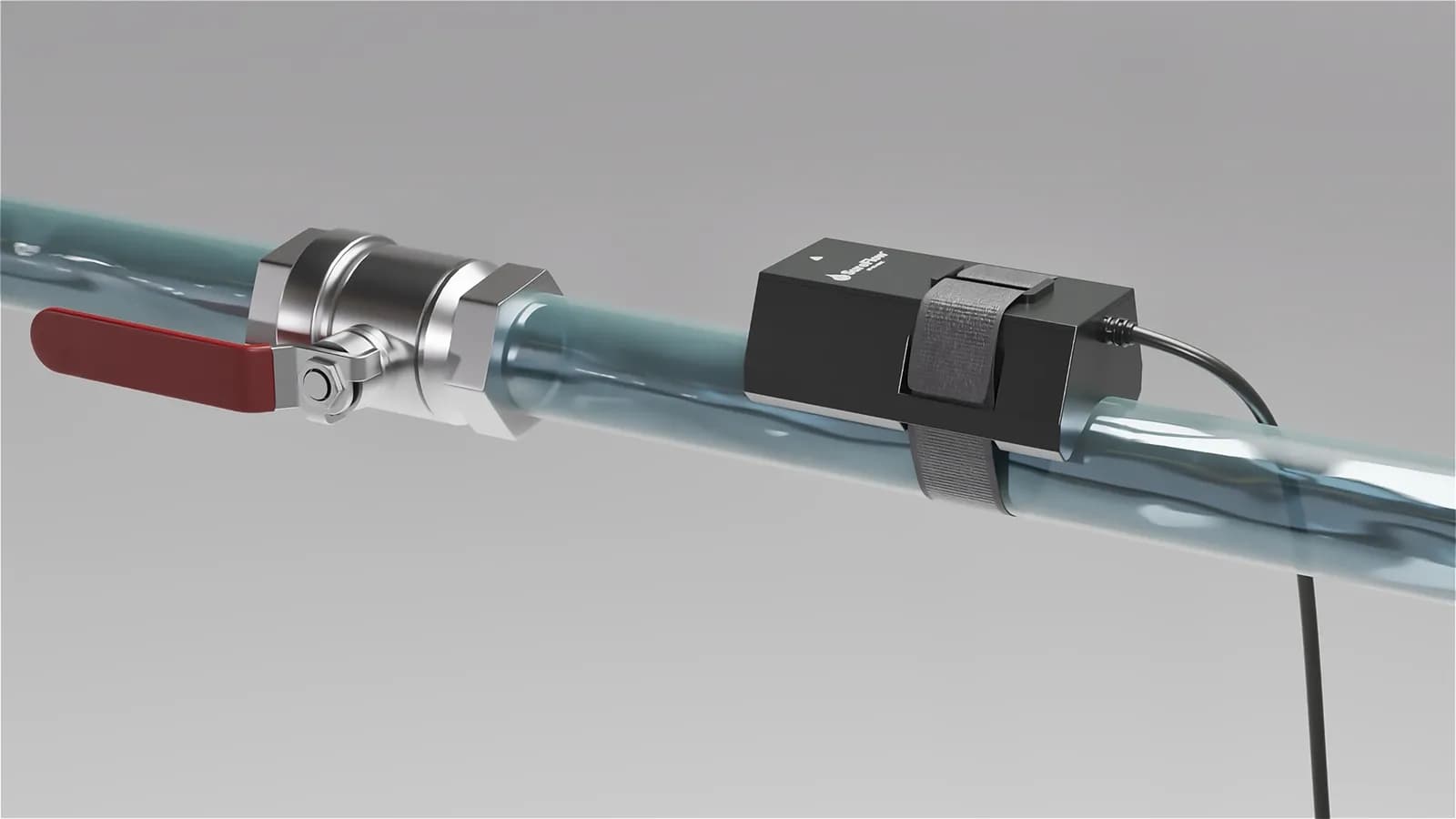
The SureFlow Water Clamp Sensor represents this new generation of backflow detection technology. Unlike traditional mechanical prevention devices that passively resist reverse flow, the sensor actively monitors for the conditions that signal backflow is occurring.
The device clamps externally onto pipe surfaces, using ultrasonic technology to measure flow without cutting or altering plumbing. Powered by AI, the sensor analyzes flow variations to detect anomalies that signal potential backflow conditions.
When water reverses direction due to pressure changes, instant alerts enable immediate visibility into flow anomalies, allowing rapid response before contaminated water spreads through distribution networks.
For high-risk facilities like healthcare centers and commercial operations, continuous monitoring provides critical early warning that helps prevent incidents from escalating into serious contamination incidents.
Contact SureFlow to discover how advanced flow monitoring can protect water distribution networks and the communities they serve.